



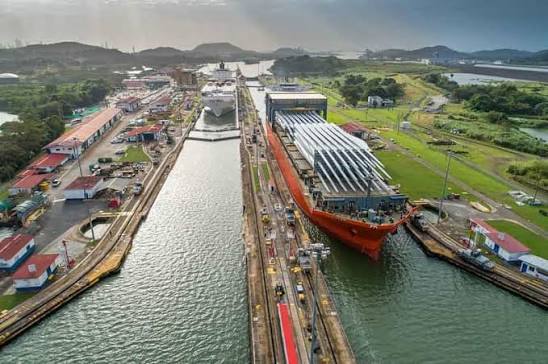
Due to dropping water levels in the Panama Canal and the intensifying impacts of the El Niño phenomenon, the maximum permitted draft for Neopanamax vessels is being reduced once again. The new restrictions, which will come into effect from late August and early September, have heightened concerns that the drought crisis that severely impacted the global supply chain in 2023–2024 could repeat itself.
Sea-news.az reports that, according to the announcement by the Panama Canal Authority (ACP), taking into account the falling water level in Gatun Lake and hydrological forecasts, the maximum draft for Neopanamax vessels will be reduced in two stages.
Thus, starting from August 26, the maximum draft will be lowered to 48 feet (14.63 meters), and from September 3 to 47.5 feet (14.48 meters). The new decision will remain in effect until further notice.
With this, the ACP is implementing its fourth and fifth draft restrictions in 2026. Previously, restrictions of 49 feet went into effect on July 24 and 48.5 feet on August 15.
The canal administration stated that despite the new restrictions, no changes to the daily vessel transit quota are planned for now. Officials noted that water-saving measures implemented since December 2025 have increased the canal’s resilience to drought. At the same time, the water level in Gatun Lake and meteorological forecasts are being constantly monitored, and additional measures will be taken if necessary.
The new decisions have brought the drought crisis experienced in the Panama Canal in 2023 back into focus. During that period, due to El Niño, the maximum draft was lowered from 50 feet to 44 feet, and the number of daily transits dropped from approximately 40 vessels to 20.
During the crisis, the number of ships waiting in line at the canal exceeded 160, and some vessels faced delays of over two weeks. One of the most notable events of that period was an operator paying 4 million US dollars in an auction for priority transit rights.
Due to increased waiting times and costs, many shipowners diverted their routes to the Suez Canal or alternative maritime routes passing through the southern tip of South America, which led to delays in the global supply chain and an increase in shipping tariffs. Following an increase in rainfall in 2024, the situation gradually normalized, and the canal administration raised the draft back to 48 feet, restoring transit capabilities.



