



The possibilities of signing a Memorandum of Understanding and Cooperation between the Alat Free Economic Zone (AFEZ) and the Transport-Europe-Caucasus-Asia (TRACECA) corridor, which will determine the main directions of joint activities, have been considered.
Sea-news.az reports according to information from the Alat Free Economic Zone, that this was discussed during a meeting between Valeh Alasgarov, Chairman of the Board of Directors of AFEZ, and TRACECA Secretary General Jasurbek Choriyev.
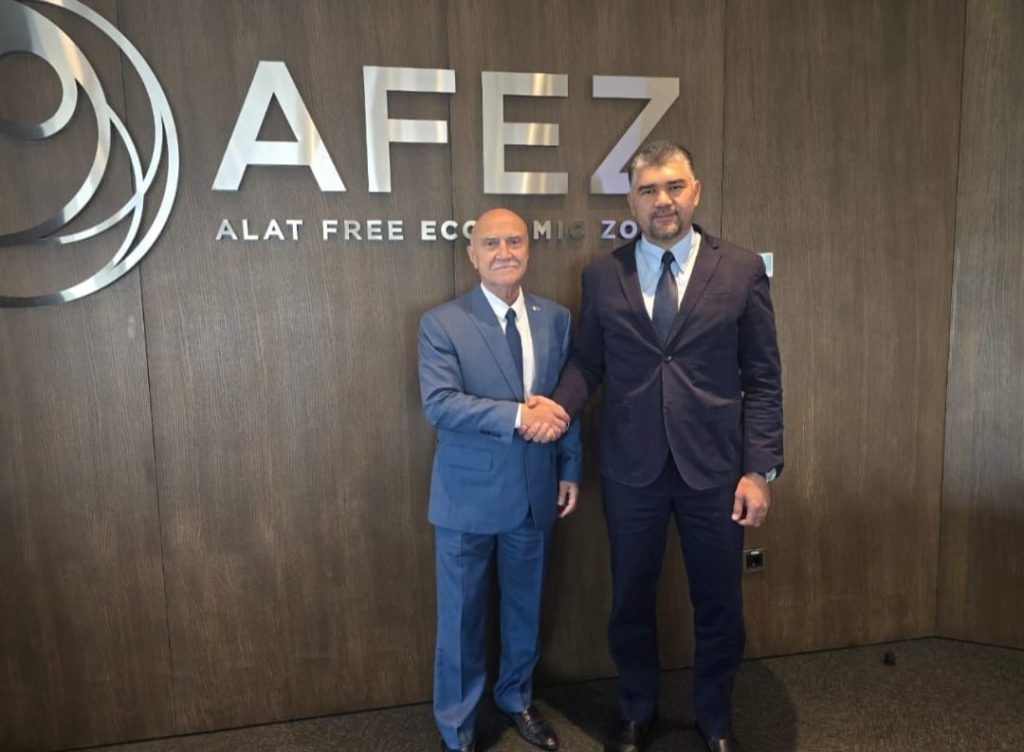
During the meeting, prospects for establishing practical cooperation between TRACECA and the Alat Free Economic Zone Authority were discussed. Particular attention was directed toward establishing and regularly implementing the exchange of information regarding the types and nature of cargo transported along the TRACECA route. At the same time, the possibilities of signing a Memorandum of Understanding and Cooperation that will define the main directions of joint activities were considered. At the end of the meeting, the parties confirmed that they share similar approaches to the development of the region’s transport and logistics potential.
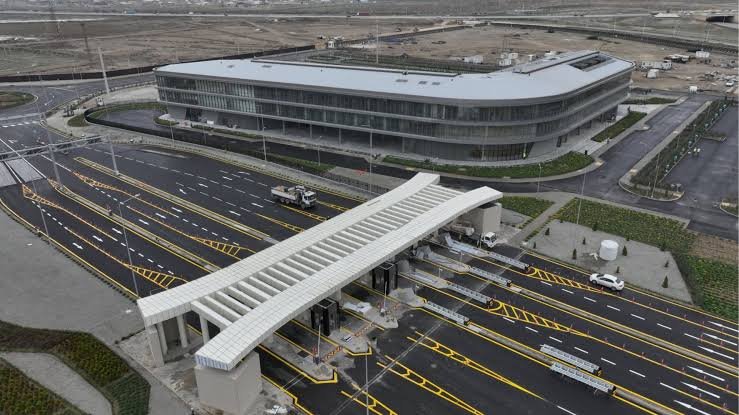
It should be noted that the Alat Free Economic Zone is located near the Baku International Sea Trade Port, at the intersection of the international East-West and North-South transport corridors. The approved master plan of the zone covers an area of 719 hectares. In total, approximately 6,500 hectares of land have been allocated for the development of the Alat Free Economic Zone, of which more than 1,000 hectares are intended for future expansion.
Currently, a 5-hectare logistics center with an annual cargo processing capacity of 500,000 tons transported by road operates in the zone. The center also has access to railway infrastructure.
Currently, construction of the new international airport is ongoing. The cargo and business terminals of the airport are planned to be commissioned no later than the first quarter of 2027. At the initial stage, the annual freight capacity of the terminal is projected at 500,000 tons, and at the subsequent stage, at 1.5 million tons.
The location of AFEZ along transport corridors also expands its prospects for development as a regional logistics and production hub. Valeh Alasgarov, Chairman of the Board of Directors of the Authority of the Alat Free Economic Zone, stated this some time ago in an exclusive interview with Trend.
According to him, Azerbaijan’s geographical position creates a significant advantage for AFEZ in terms of access to various transport routes.
“The Alat Free Economic Zone is adjacent to the Baku International Sea Trade Port and is located at the intersection of international transport corridors such as North-South and East-West. This creates opportunities for investors to use sea, rail, and road transport,” V. Alasgarov stated.
He noted that the expansion of transport connections creates additional opportunities for export-oriented manufacturing enterprises operating in AFEZ.
“After the opening of the Zangezur corridor, naturally, this will create new opportunities for us for the transportation of any cargo. The new route line will shorten and accelerate transport distances, further reducing transportation costs,” the chairman emphasized.
According to V. Alasgarov, from this perspective, the integration of AFEZ into various international transport routes can expand the logistical capabilities of both investors and manufacturing enterprises.
He also noted that priority is given to the establishment of export-oriented enterprises in AFEZ. Currently, various projects are being implemented in the zone by companies from Turkey, China, Israel, European countries, and local companies of Azerbaijan.
New projects related to the establishment of large industrial enterprises in the Alat Free Economic Zone are expected to be announced in the near future. It is stated that these projects will further increase the investment attractiveness of AFEZ and give impetus to the expansion of export-oriented production.



