
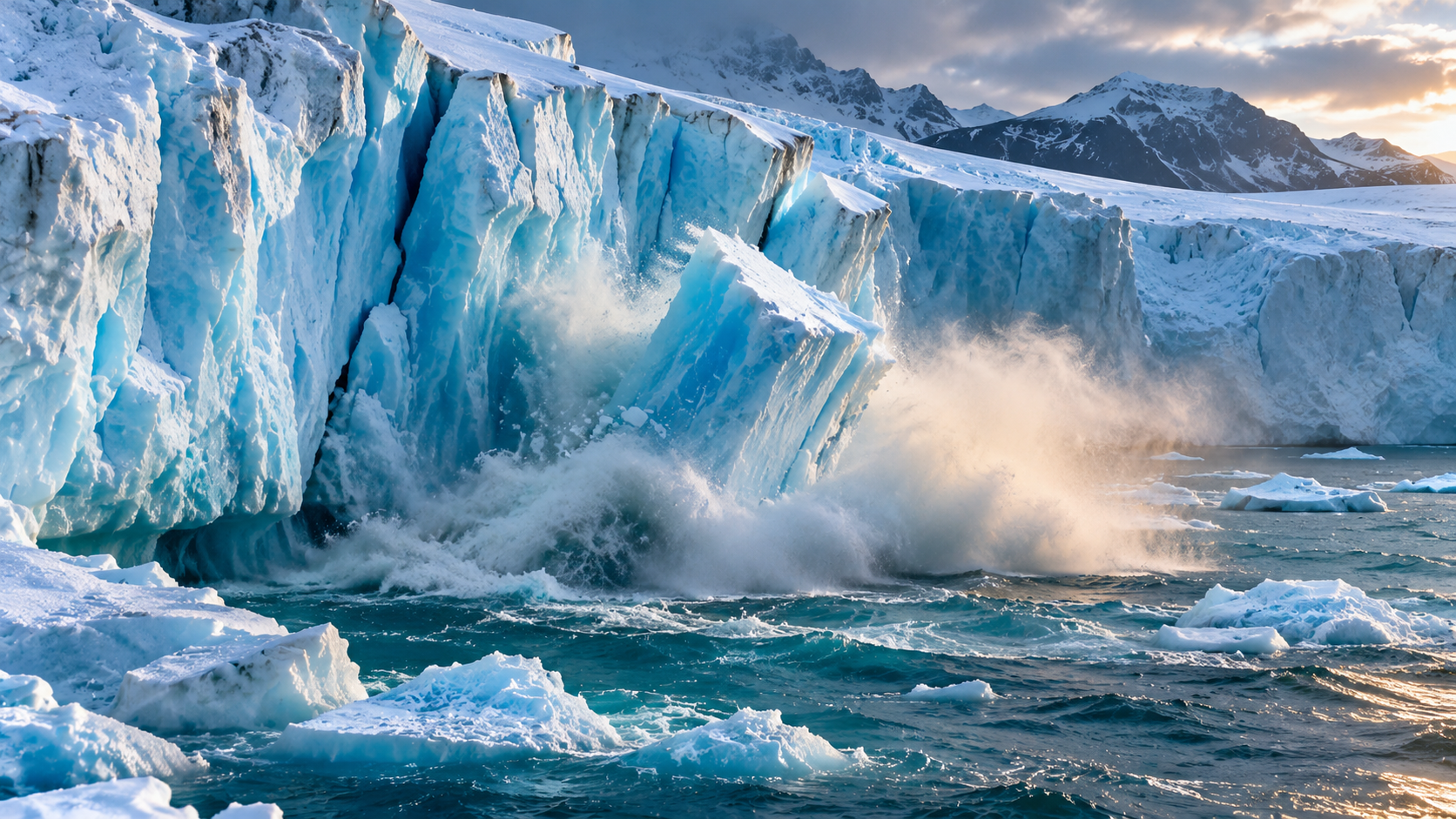
According to a study conducted in the United States, 12.5 trillion tons of ice have been lost since 1979 as a result of the melting of glaciers in Greenland and Antarctica. Experts say this amount would be enough to cover the surface of the United States with an ice sheet approximately 1.5 meters thick.
Sea-news.az reports that large and small pieces of ice that had broken away from glaciers and drifted into the sea were observed along the coast of Greenland, an autonomous territory of the Kingdom of Denmark in Northern Europe.
According to a study published in the journal “Scientific Data,” 12.5 trillion tons of ice have been lost since 1979 due to the melting of glaciers in Greenland and Antarctica. Researchers noted that this amount would be enough to cover the surface of the United States with an ice sheet approximately 1.5 meters thick.
GLACIERS ARE FLOWING INTO THE OCEAN
According to the U.S. news agency The Associated Press (AP), a study published at the beginning of September found that the impact of global warming on land and bodies of water is also accelerating the melting of the two largest ice sheets on Earth.
Four-fifths of the melting is caused not by warmer air temperatures, but by warm waters eroding the ice sheets from below and from the sides. In other words, glaciers are effectively flowing into the oceans.
The authors of the study emphasized that this situation is bad news in terms of future sea-level rise.
“THE POLES ARE MELTING, SEA LEVELS ARE RISING AROUND THE WORLD”
Eric Rignot, a glaciologist at the University of California, Irvine, and one of the study’s co-authors, commented:
“The ice sheets are melting rapidly. The polar regions are melting, and sea levels are rising around the world. This will further increase the vulnerability of coastal areas.”
According to the study, all this melted ice, along with other climate factors contributing to sea-level rise, has raised global sea levels by approximately 3.1 centimeters since 1979.
Although this figure may not sound particularly large, every 1-centimeter rise in sea level results in at least another 2–3 million people being affected by flooding at least once a year.