
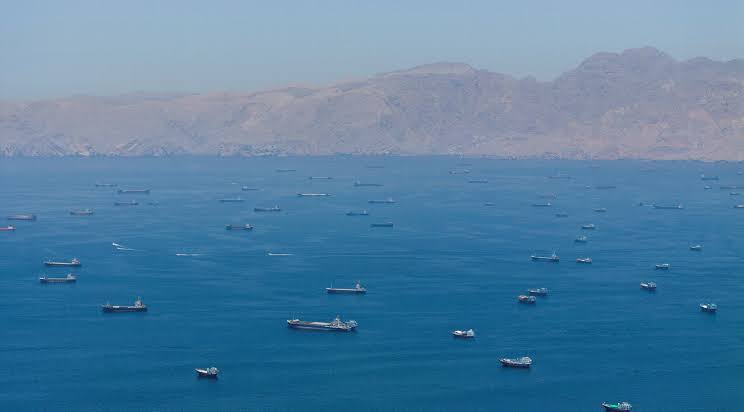
Global oil supply dynamics are beginning to realign as signs of oversupply re-emerge across international markets.
Sea-news.az reports citing Reuters, that market analysts and traders attribute the return of excess crude supply to demand destruction caused by sustained high prices, even as the military conflict involving Iran continues to disrupt daily Middle Eastern maritime exports.
At the onset of 2026, baseline market projections anticipated an overall supply surplus; however, the outbreak of the Iran conflict in late February triggered the largest supply disruption in modern history. This shock drastically curtailed crude shipments out of the Middle East, rendering earlier supply-demand balance forecasts obsolete.
In response to elevated energy costs, major investment banks and government agencies lowered their global oil demand projections for 2026. As export flows gradually recover, subdued demand growth is helping clear the deficit and restore equilibrium.
A market research report by JPMorgan indicates that the recovery of Middle Eastern export volumes, alongside expanding output from non-OPEC producers and weakening global consumption, has pushed supply ahead of total demand once again.
“According to our calculations, the global oil market recorded a supply surplus of 1.1 million barrels per day (bpd) in September, expanding to 1.4 million bpd in October. This virtually matches the average surplus of 1.3 million bpd recorded last year,” JPMorgan analysts stated.
The bank noted that while global crude imports in October surpassed average 2025 levels, overall demand expansion continues to trail the rebound in supply.
The ongoing conflict prompted industrialized nations to execute record emergency drawdowns from strategic petroleum reserves, while also leading to significant reductions in commercial crude inventories.
However, analysis by Goldman Sachs shows that global petroleum inventories—which plummeted severely in the initial months of the conflict—stabilized without further declines through September and October.
Both financial institutions highlighted a notable recovery in Middle Eastern crude flows in recent months relative to the sharp drop witnessed during the early phase of the conflict.
Although Middle East waterborne shipments in October dipped slightly compared to September’s post-conflict peak, vessel-tracking firms noted that October figures may undergo upward revisions as finalized port and AIS data are ingested.
Preliminary tracking data from Vortexa indicates that despite elevated maritime security risks around the Strait of Hormuz, Persian Gulf oil exports in October recovered to approximately three-quarters of pre-war volumes. While Saudi Arabia maintained consistent export levels, output from the UAE, Kuwait, and Qatar reflected minor contractions.
According to Vortexa, crude and condensate exports from Gulf producers averaged 14 million bpd in October—roughly 86% of pre-war operational levels—while refined product shipments averaged 3.1 million bpd, representing just over half of normal historical throughput.