Today is International Snow Leopard Day.
Sea-news.az reports that in October 2013, the World Snow Leopard Conservation Forum held in Bishkek laid the foundation for a new holiday — International Snow Leopard Day. Since then, this day has been celebrated annually on October 23.
In December 2024, the United Nations General Assembly (UNGA), recognizing that the snow leopard, also known as the irbis, is a vital component of mountain ecosystems, adopted a resolution proclaiming October 23 as International Snow Leopard Day. The resolution emphasized that mountain ecosystems play an extraordinarily critical role in providing a significant portion of the global population with water and other essential resources, as well as ecosystem services. A total of 61 countries, including Azerbaijan, co-sponsored the document. Among these nations were Afghanistan, India, Kazakhstan, China, Kyrgyzstan, Pakistan, Russia, Tajikistan, Turkmenistan, and Uzbekistan.
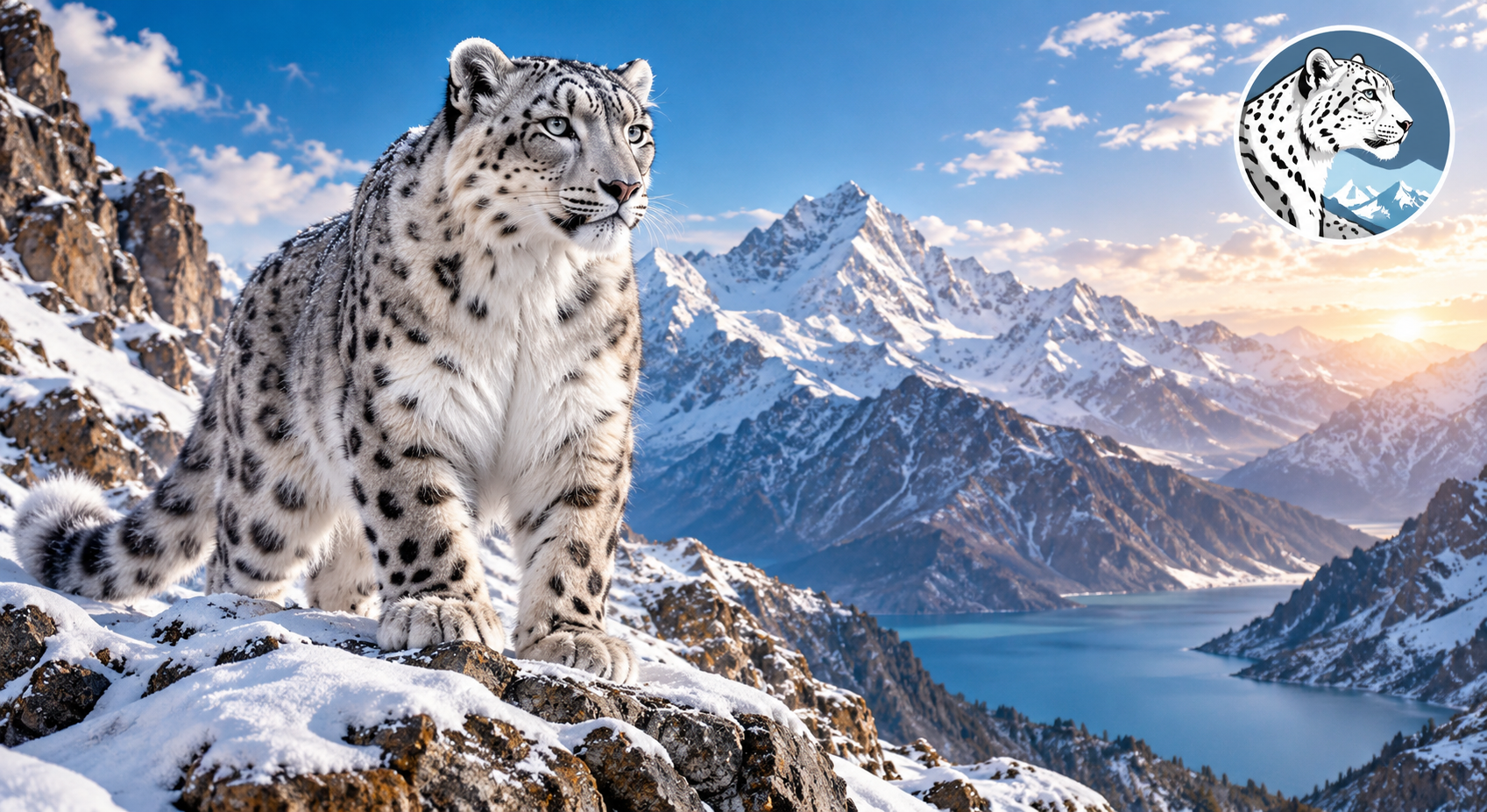
The snow leopard (Panthera uncia), also known as the irbis, is a mammal belonging to the felid family. It features an elongated body and relatively short legs. Its body length reaches up to 130 centimeters, its tail measures 90–100 centimeters, and its height at the shoulders ranges between 50–60 centimeters. Males are larger than females, with male weights ranging from 45–55 kilograms, while females weigh between 22–40 kilograms. The snow leopard is distinguished by its dense fur coat and long, thick tail. Its fur coloration is smoky brown-gray adorned with large, dark rosettes. In winter, its coat turns light gray, almost white. The lifespan of a snow leopard in the wild does not exceed 20 years, whereas in protected habitats it can live up to 28 years.
Due to its small population size and the threat of extinction, this rare animal has been listed in the Red Data Book. Hunting snow leopards is strictly prohibited in all range states where it lives. The species is also included in Appendix I of the CITES Convention, which restricts international trade in endangered wild species and their parts.
This large predatory mammal of the feline family resides mainly in the high mountain ranges of Central Asia. It inhabits alpine and subalpine zones, rocky areas, sharply dissected terrain, and regions rich in ungulate prey. The snow leopard is well adapted to harsh climate conditions. Because it is so rarely spotted in the wild, local inhabitants often refer to the animal as the “ghost of the mountains”.
However, the snow leopard’s distinct coloring and valuable pelt have made it a target for poachers. Illegal hunters take immense risks to capture this wild creature. Furthermore, the expansion of grazing lands, livestock grazing in high-altitude zones, and climate change in Central Asian countries contribute to the shrinking of the snow leopard’s natural habitat.
The population count and status of this rare animal are regularly monitored in its range states. Given that the snow leopard is an exceptionally cautious creature, camera traps are widely utilized for this purpose.
To address the decline of the irbis population and mitigate the threat of total extinction, the World Snow Leopard Conservation Forum was held in Bishkek, the capital of Kyrgyzstan, in October 2013. The event brought together representatives from 12 range countries: Afghanistan, Bhutan, India, Kazakhstan, China, Kyrgyzstan, Mongolia, Nepal, Pakistan, Russia, Tajikistan, and Uzbekistan.
As an outcome of the discussions, a conservation program for the rare species was adopted on October 23, 2013, and formalized as a Declaration. The date of adoption of the Bishkek Declaration was chosen as the official date to observe International Snow Leopard Day.
Today, photo exhibitions, seminars, and documentary screenings dedicated to the life of the snow leopard are organized in scientific and educational institutions. Activists conduct awareness campaigns across social media platforms to raise public knowledge about the snow leopard and draw attention to the vital importance of preserving the planet’s endangered species.