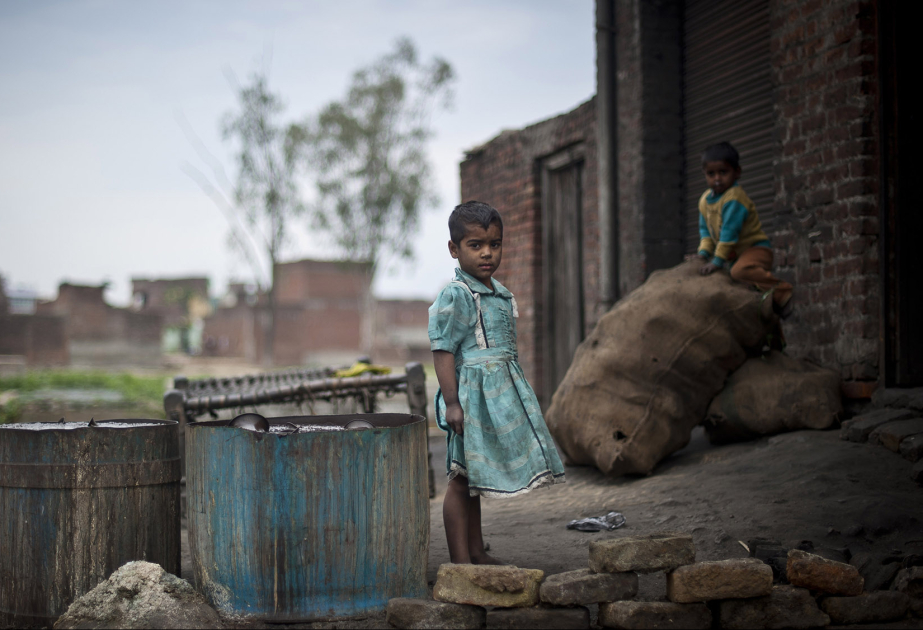
Sea-news.az reports that the history of the International Day for the Eradication of Poverty is closely linked to October 17, 1987. On that day, more than 100,000 people gathered at the Trocadéro Human Rights Plaza in Paris, where the Universal Declaration of Human Rights was signed in 1948, to honor the victims of extreme poverty, violence, and hunger.
Those assembled declared that poverty is a violation of human rights and affirmed the need to come together to ensure that these rights are respected. These statements are inscribed on the Commemorative Stone unveiled that day.
Since then, people of all backgrounds, beliefs, and social origins have gathered every year on October 17 to renew their commitment and show their solidarity with the impoverished. Similar commemorative stones have been unveiled in many countries around the world, serving as gathering places to mark the International Day. One such stone is located in the garden of the United Nations Headquarters. The annual ceremony organized by the UN Secretariat in New York takes place directly in front of this commemorative stone.
In 1992, the UN General Assembly officially declared October 17 as the International Day for the Eradication of Poverty through resolution A/RES/47/196. The Assembly invited all States to devote the Day to presenting and promoting, as appropriate in the national context, concrete activities with regard to the eradication of poverty and destitution. The primary objective of the Day is to raise awareness of the need to eradicate poverty and destitution in all countries.
In a world characterized by an unprecedented level of economic development, technological means, and financial resources, it is unacceptable that millions of people live in extreme poverty. Poverty is not solely an economic issue; rather, it is a multidimensional phenomenon that encompasses a lack of both income and the basic capabilities to live in dignity. This includes unsafe working and living conditions, lack of nutritious food, unequal access to justice, and limited access to healthcare.
People living in poverty also face negative social attitudes. They are stigmatized, subjected to discrimination, judged by their appearance, accent, address, or homelessness, and treated with disrespect.
According to UN data, 670 million people live below the international poverty line, defined as living on less than $2.15 per day. Furthermore, it is projected that by 2030, 7 percent of the global population—roughly 575 million people—could remain trapped in extreme poverty.
In 2020, the global COVID-19 pandemic set back decades of progress in the fight against poverty and extreme poverty. According to the World Bank, the crisis pushed an estimated 150 million people into poverty, with the majority concentrated in South Asia and Sub-Saharan Africa, where poverty rates were already high.
These newly impoverished individuals joined the 1.3 billion people already living in multidimensional and persistent poverty. The pandemic further deepened their existing challenges. In fact, measures implemented to prevent the spread of the virus often exacerbated their situation, as informal economic activities, which provide a lifeline for those living in poverty, came to a near standstill in many countries.
The UN maintains that sustainable poverty eradication requires strengthening human potential. In this regard, supporting education, science, and the creative economy is of vital importance, as these sectors not only serve as primary sources of employment but also foster a sense of pride and dignity among individuals.
In its resolution, the General Assembly invited intergovernmental and non-governmental organizations to assist States, at their request, in organizing national activities to observe the International Day. Additionally, the Secretary-General was requested to take the necessary measures, within existing resources, to ensure the successful observance of the Day by the United Nations.
October 17 represents an essential opportunity to acknowledge the effort and struggle of people living in poverty, a chance for them to make their concerns heard, and a moment to recognize that poor people themselves are at the forefront of fighting poverty.
Since its inception, a central focus of observing this Day has been ensuring the participation of people living in poverty. The events held on October 17 reflect the willingness of impoverished individuals to utilize their knowledge and experience to contribute to the eradication of poverty.