



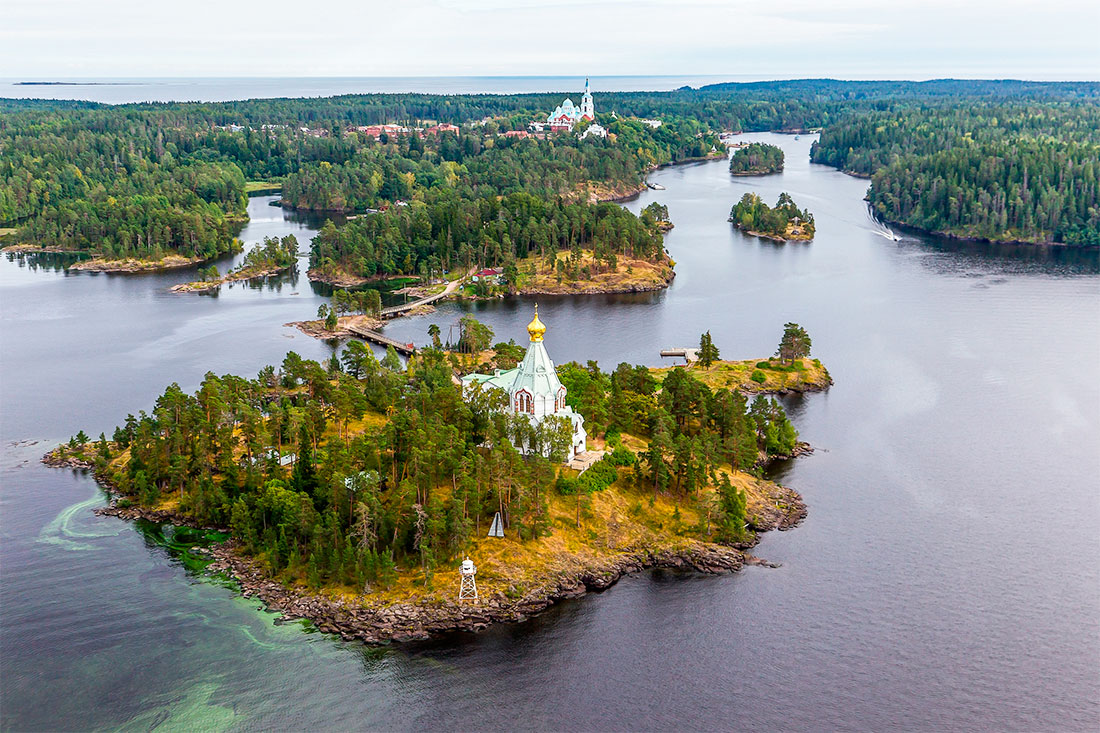
As a result of a geological process continuing for thousands of years on the western coast of Finland, lands previously covered by ice sheets are gradually rising. At first glance, this appears to be a natural expansion of dry land, but it creates certain difficulties regarding property matters for shoreline landowners. Newly formed land areas do not automatically pass into the ownership of the nearby real estate owner.
Sea-news.az reports citing ECONews, that during the last ice age, the weight of the massive Scandinavian ice sheet depressed the Earth’s surface in some regions by more than 500 meters. After the glaciers retreated more than 10,000 years ago, the Earth’s crust gradually began to return to its original position. This process continues to this day.
According to the National Land Survey of Finland, the area where land is rising most rapidly is the Kvarken region. Here, the Earth’s surface rises by approximately 1 centimeter per year. In the country’s southeast, the uplift rate is less than 3 millimeters per year. According to NASA’s estimations, approximately 700 hectares of land emerge from under the water in the Gulf of Bothnia every year.
In Finland, land areas that were previously covered with water and later dried up are called “vesijättö”. Such areas can be created as a result of crustal uplift, falling water levels, or the gradual spread of vegetation along the edges of water bodies.
Property rights to these lands do not automatically transfer to the owner of the nearest real estate. In many cases, the right remains with the person who previously owned that water area.
As a result, newly formed land may be in the joint ownership of several proprietors. This can stem from rights related to the water area that was previously in their joint ownership. Thus, even if the coastline changes, ownership information in the real estate registry is not automatically updated.
At the same time, individuals who own a cottage in the coastal area can apply to purchase the newly formed land plot if their houses remain far from the shore due to the recession of the water.
According to data, the average cost of the land registration procedure is approximately 2 to 3 thousand euros. This amount does not include compensation and taxes paid to the previous land owner.
Changes in the coastline and their impact on property are not a new issue. Documents pertaining to the Swedish town of Östhammar show complaints regarding this problem as early as 1491.
During that period, the recession of the coastline rendered the town’s old port unusable. This historical example demonstrates that the natural transformation of coastal zones has affected both settlements and property relations for centuries.



