



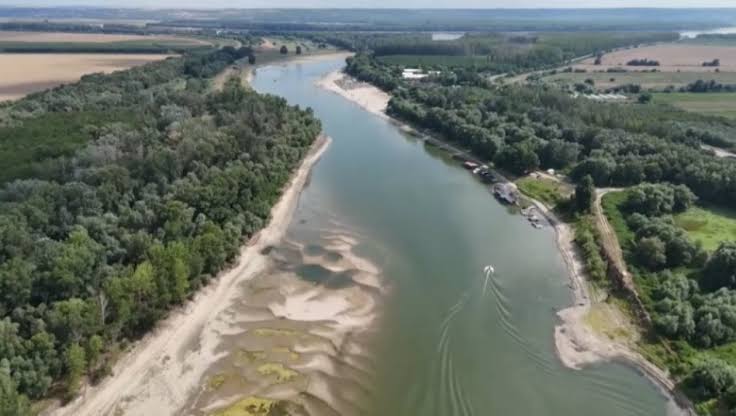
The water level on the Bulgarian sector of the Danube River continues to fall, with draft restrictions for vessels remaining in effect across the entire river section.
Sea-news.az reports citing information from Bulgaria’s Executive Agency for Exploration and Maintenance of the Danube River via the BTA agency, that over the past 24 hours, water levels dropped by 1 to 4 centimeters across all major hydrological stations on the Bulgarian stretch. The most significant drops were recorded at the Ruse and Silistra monitoring points.
According to the River Watch Directorate, no new groundings of vessels or barges—either within or outside the navigational channel—were recorded over the past 24 hours. Nevertheless, due to low water levels, authorized vessel draft restrictions remain fully enforced throughout the Bulgarian sector.
The agency notes that the hydrological situation on the Danube remains complex. The shallowing restricts cargo vessels from navigating at full capacity, driving up transport costs and necessitating additional logistical measures on certain routes.
The Danube is one of Europe’s primary inland waterways. Connecting the Black Sea basin with Central and Western Europe, the river plays a vital role in transporting agricultural goods, fuels, metals, construction materials, and other cargo. Consequently, prolonged low water levels on the Danube carry significant implications not only for Bulgaria and Romania but for European logistics and supply chains as a whole, as the Danube corridor is also utilized for multimodal freight transport from Black Sea ports to Central Europe.



