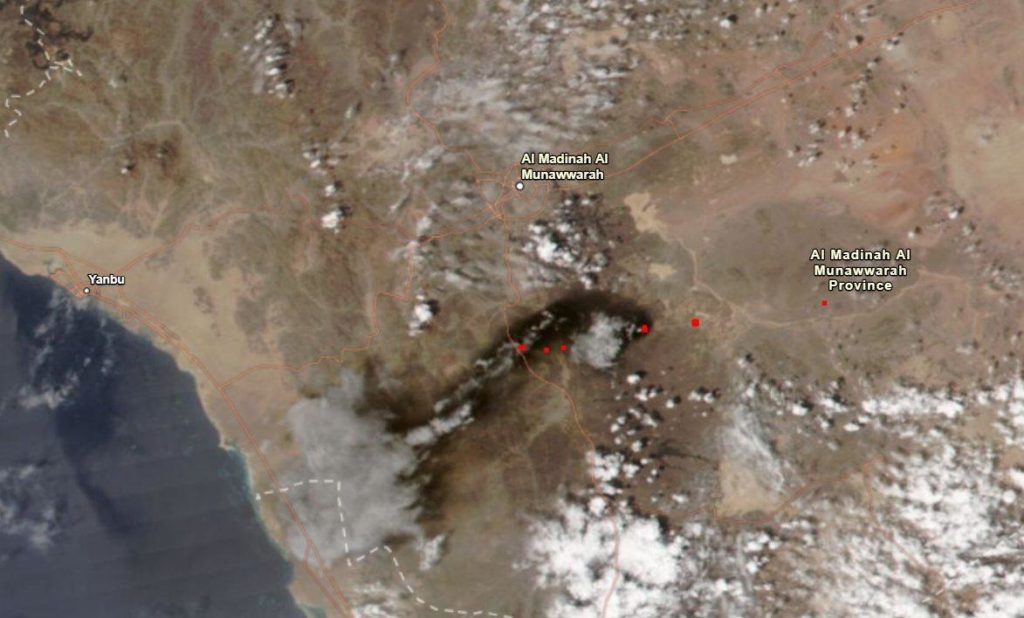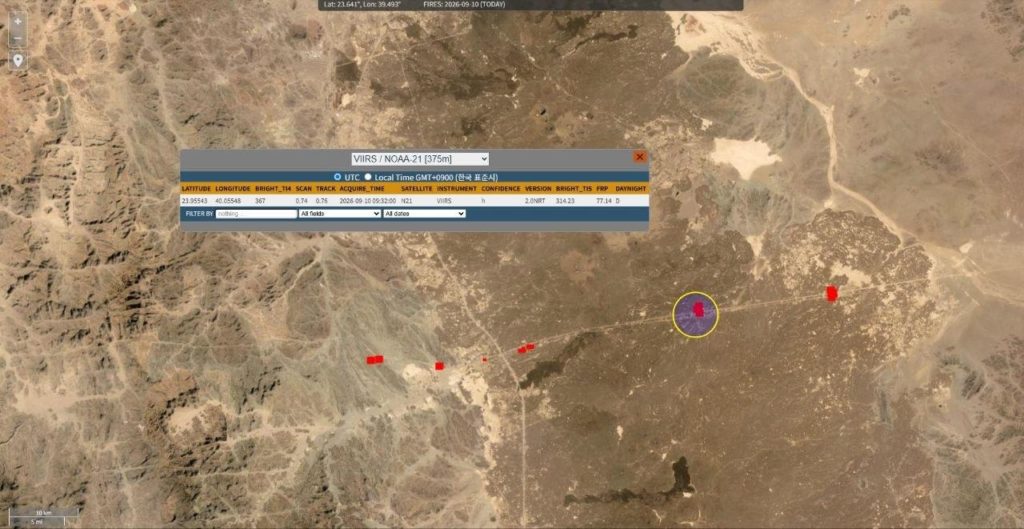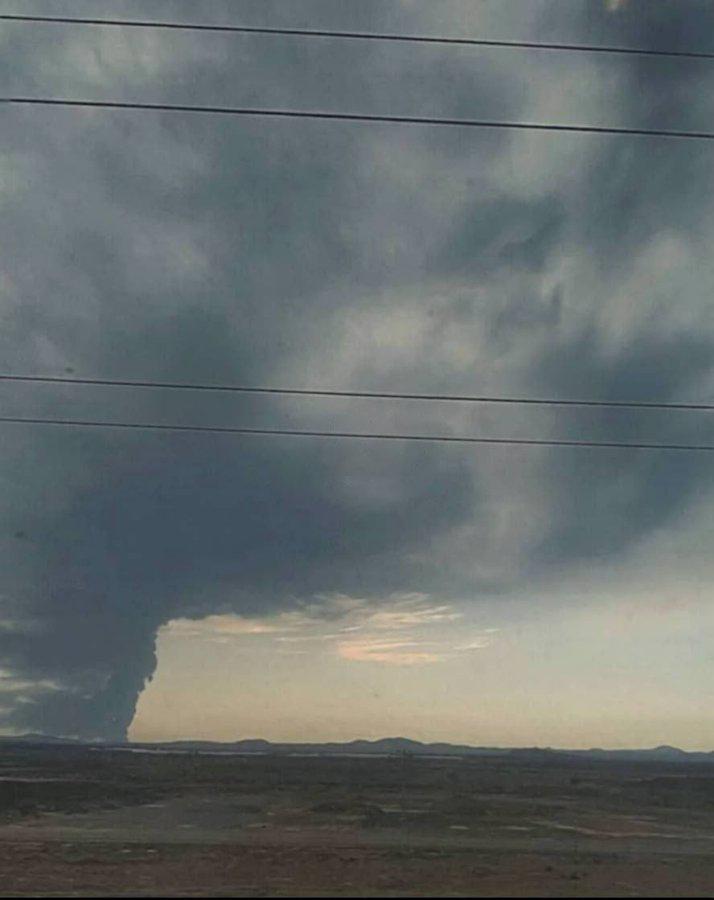
Satellite imagery reveals heavy smoke and persistent thermal anomalies extending approximately 100 kilometers along the East-West oil pipeline southeast of Medina in Saudi Arabia.
Sea-news.az reports citing Clash Report, that NASA fire data recorded thermal signals exceeding 70 megawatts lasting for several hours at multiple locations along the pipeline corridor—figures significantly higher than standard flare combustion. According to Clash Report, some analysts do not rule out that six to eight sections of the pipeline may have been damaged, along with potential breaches or ruptures.
At present, official confirmation regarding this information has not been issued by Saudi Aramco or any major international news agency.
Nevertheless, the infrastructure in question is of vital strategic importance. The East-West Pipeline serves as Saudi Arabia’s primary alternative route bypassing the Strait of Hormuz. Its transport capacity is approximately 7 million barrels of oil per day, with roughly 5 million barrels shipped to the Red Sea port of Yanbu.
Observers note that if the reports of a strike are confirmed, an attack on this facility would pose a severe threat to Saudi Arabia’s backup export route—a line the country has heavily relied on following restrictions on navigation through the Strait of Hormuz.
Recall that the pipeline was also targeted back in April, when an Iranian drone strike reportedly halted the transit of approximately 700,000 barrels of oil per day for four days.