



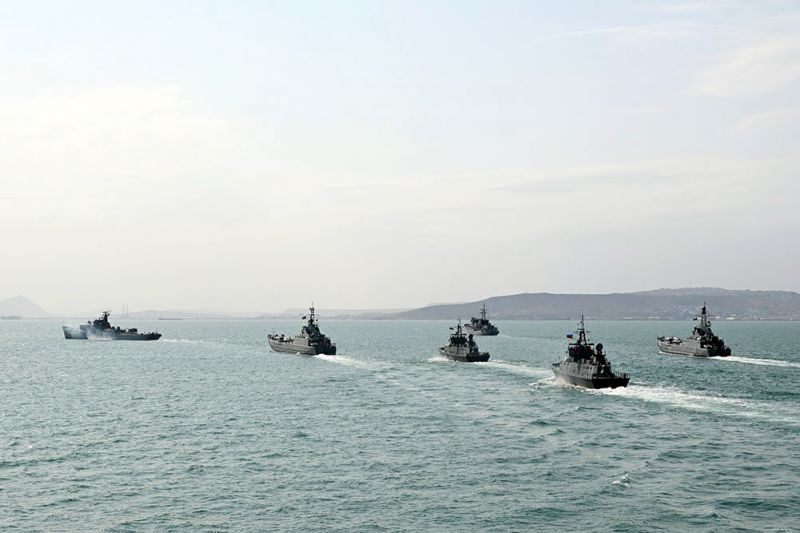
“In recent times, the intensification of the Russia-Ukraine war in the Black Sea has put Turkey in a difficult position both politically and economically. Especially with Ukraine targeting Turkish vessels and 56 liners flying the Turkish flag facing serious threats, severe risks to security and the economy are emerging in the Black Sea.”
Sea-news.az reports that this was stated in an interview with Oxu.Az by Husamettin Inanch, a professor at Kutahya Dumlupınar University and a commentator on international relations.
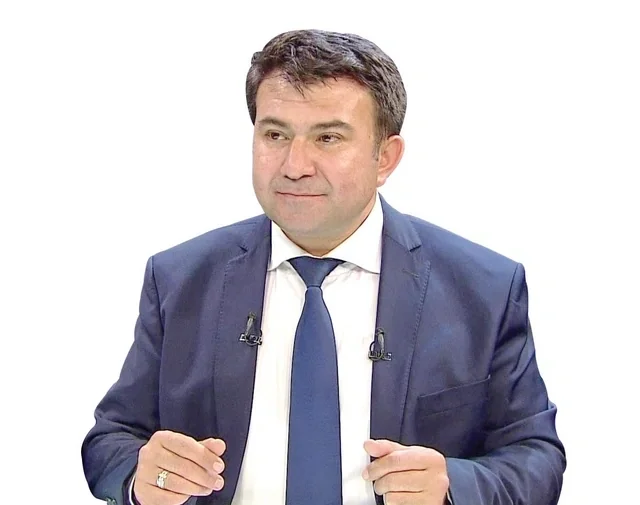
He noted that until recently, the Black Sea was known as an exceptionally secure basin divided fairly between Russia and Turkey: “Thus, under the agreement signed in 1995, economic zones and maritime border protocol agreements were signed and ratified by the Grand National Assembly of Turkey. The status quo has not changed since that day. At the same time, Turkey has demonstrated its capacity to strictly ensure security here by barring warring parties from entering the Black Sea through the Montreux Convention. However, at the current juncture, especially the European Union (EU), the US, and Ukraine are pushing Turkey to enter the war on the side of the West. Particularly with the NATO summit held in Ankara on July 7–8, Turkey was reaffirmed as a core country of the alliance and has transformed into a more powerful actor in NATO decision-making mechanisms. Consequently, all of this severely strains Turkey’s relations with Russia. For instance, Russia has recently halted imports of fresh produce and vegetables from Turkey. Furthermore, one of the most important topics discussed between Putin and Erdoğan at the Shanghai summit held in Bishkek was the reassessment of Turkish-Russian relations.”
“On the other hand, Turkey’s reported willingness to sell ‘S-400’ missiles to a third country in order to return to the ‘F-35’ program is also seen as a factor negatively impacting these relations. In this context, the grave threats against Turkish ships in the Black Sea and attempts to somehow introduce NATO into the region have become a red line for Turkey. Therefore, at this stage of the war, Turkey is compelled to continue its political stance known as ‘active neutrality’—meaning maintaining an equal distance from both Russia and Ukraine. In this sense, Turkey is also striving to keep a serious diplomatic distance from Ukraine while taking necessary steps. However, it is also known that there is an initiative regarding the sale of 600 million dollars worth of ‘Atak’ missiles and American-made weaponry to Ukraine. This issue has also surfaced as a matter causing concern for Russia,” the professor emphasized.
Our interviewee added that Turkey will take the necessary steps to preserve security and stability in the Black Sea as before: “However, Russia’s efforts to capture Odessa and deprive Ukraine of its status as a Black Sea nation constitute a reality that Turkey will not accept. Consequently, Turkey is forced to maintain this highly delicate balancing policy between Russia and Ukraine. Yet as military operations continue—especially with Russia recently threatening Germany, Poland, and Estonia in a manner that could draw it into a war with NATO—the process becomes even more complicated, prompting different actors in the Black Sea to establish distinct political positions. Turkey is taking crucial steps regarding the necessity of ending this war as soon as possible. Because this war threatens Turkey’s security across the entire geography, starting primarily with the Black Sea. This is why the issue was also brought to the agenda by Mr. Erdoğan and Putin at the Shanghai Cooperation Summit in Bishkek.”



