



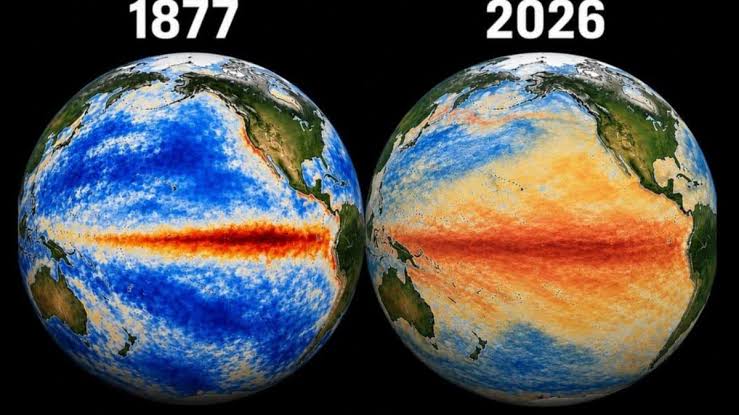
According to research by scientists from Indiana and Michigan universities cited by The Wall Street Journal, the El Nino natural phenomenon—marked by a sharp increase in water temperatures in the Pacific Ocean—carries the risk of severe repercussions for the global economy.
Sea-news.az reports that record-breaking ocean surface temperatures are not only accelerating global warming but also delivering a heavy blow to the economies of tropical countries.
Research by Indiana University scientist Christopher Callahan indicates that droughts, floods, and agricultural damages triggered by El Nino have the potential to inflict trillions of dollars in losses on the global economy, particularly hitting tropical nations.
The phenomenon directly impacts maritime transport. Severe droughts have caused water levels in Lake Gatun, which supplies freshwater to the Panama Canal, to drop sharply. Consequently, canal operators have been forced to reduce daily vessel transit limits and cargo weights.
According to a study by the University of Michigan, the intensity of El Nino trends has increased by 40% over the past 40 years, reaching a peak for the current millennium.
The severe warming of waters in the central and eastern Pacific Ocean is known as El Nino, while their cooling is called La Nina. These two alternating natural phenomena shift ocean and atmospheric wind patterns every few years, causing droughts in some regions and destructive precipitation in others, making them key factors regulating the world’s climate.



