



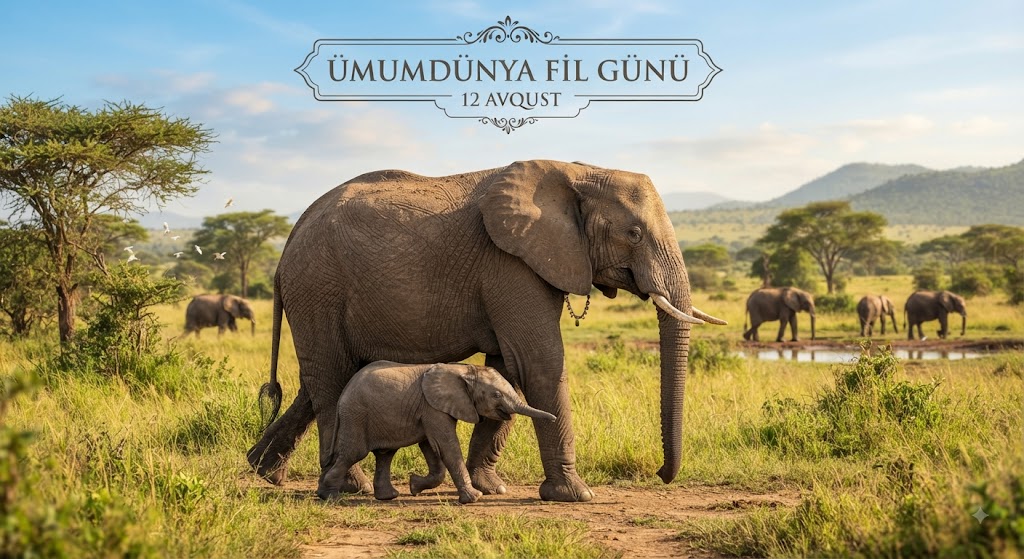
Every year on August 12, World Elephant Day is celebrated around the world.
Sea-news.az reports that the main purpose of this special day, established in 2012, is to draw attention to the protection of Earth’s largest land mammals and to increase international solidarity against global problems such as poaching and the shrinking of habitats.
In nature, there are the African savanna elephant (the largest; males weigh 4–7 tons), the African forest elephant, and the Asian elephant (3–5 tons). The ears of African elephants resemble the African continent, while those of Asian elephants resemble the Indian subcontinent. Composed of 150,000 muscle units, the trunk can hold 8 liters of water at a time. It plays the role of an air pipe during breathing, gathering food, communication, and even swimming.
Herds with strong family ties are led by female elephants. Thanks to their high memory, they do not forget water sources and migration routes for decades. Newborn calves weigh 120 kg and can stand on their feet within 20 minutes. Feeding on up to 150 kg of grass, branches, and fruits per day, elephants play a decisive role in seed dispersal and maintaining the balance of forests and savannas.
Due to the ivory trade, approximately 20,000 elephants are killed every year. Over the past century, 90% of African elephants have been destroyed (currently only about 415,000 remain in the wild). The number of Asian elephants is between 48,000 and 52,000. As a result of the targeting of big-tusked elephants, natural selection in the population has been disrupted; more elephants are beginning to be born with smaller tusks or completely tuskless. The expansion of human settlements fragments migration routes. Drought and water scarcity make their survival difficult.



