



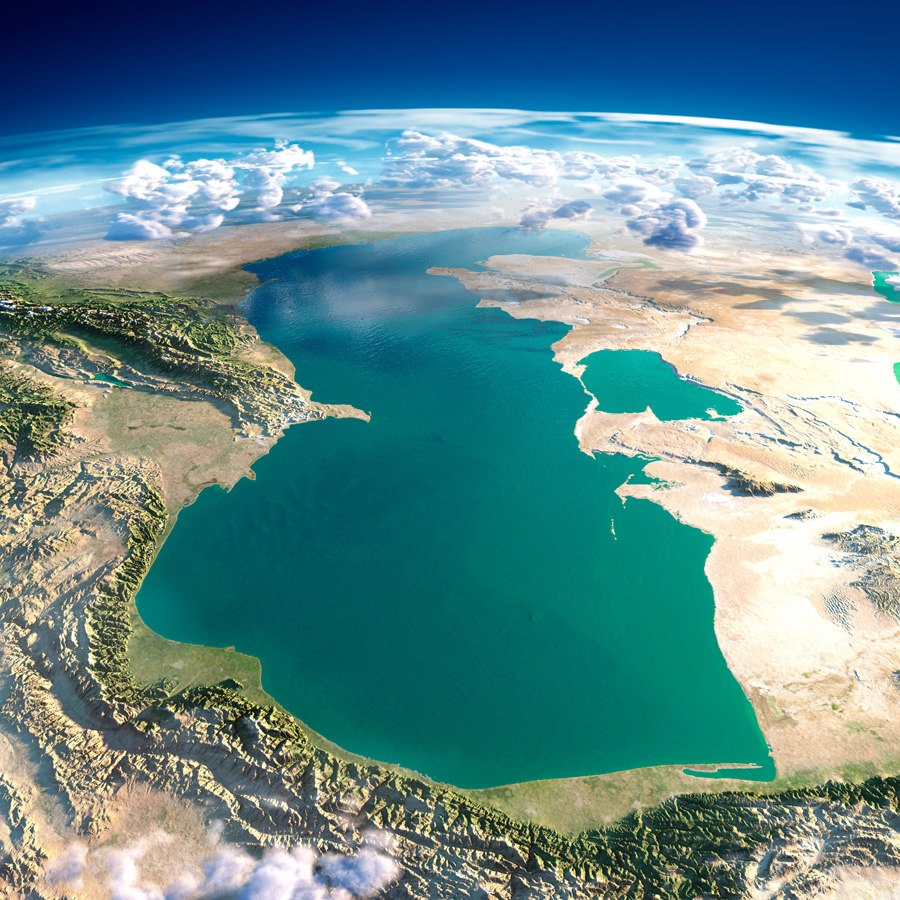
The Iranian government has stepped up steps toward the ratification in the country’s parliament (Majlis) of the Convention on the Legal Status of the Caspian Sea, signed by 5 littoral states in 2018.
Sea-news.az reports that this was stated by Iranian Foreign Ministry spokesman Esmaeil Baghaei during a briefing in Tehran.
“Since 2018, this convention has been thoroughly examined from legal, political, and other aspects. On July 22, 2026, the document was approved by the Cabinet of Ministers and submitted to parliament for ratification,” he said.
Baghaei emphasized that when joining any important international maritime treaty, Iran carefully reviews its security and legal details: “Tehran believes that the ratification of the document in parliament will strengthen cooperation among the Caspian littoral states and prevent extra-regional players from abusing this strategic water basin.”
The diplomat added that the Convention strictly prohibits any military presence of extra-regional states in the Caspian Sea. The document does not reflect the full delimitation of maritime borders and the determination of baseline coordinates—negotiations on these issues will continue within separate frameworks.
“Iran’s ratification of this convention will ensure that the document enters into full legal force, because the ratification of all 5 littoral states is an absolute condition for the implementation of the Convention. This will further strengthen mutual trust among the Caspian states,” the MFA official noted.
It should be noted that the length of the coastline of the Caspian Sea is approximately 6.38 thousand kilometers, and 5 littoral countries—Azerbaijan, Iran, Turkmenistan, Kazakhstan, and Russia—are located around the sea.
On August 12, 2018, at the 5th Caspian Summit held in Aktau, the historic Convention was signed by the heads of state. Although the document has been ratified by the parliaments of Azerbaijan, Russia, Kazakhstan, and Turkmenistan so far, it was pending only in the Iranian parliament. According to the Convention, the division of the seabed and subsoil is regulated among the littoral countries based on bilateral and multilateral agreements.



