



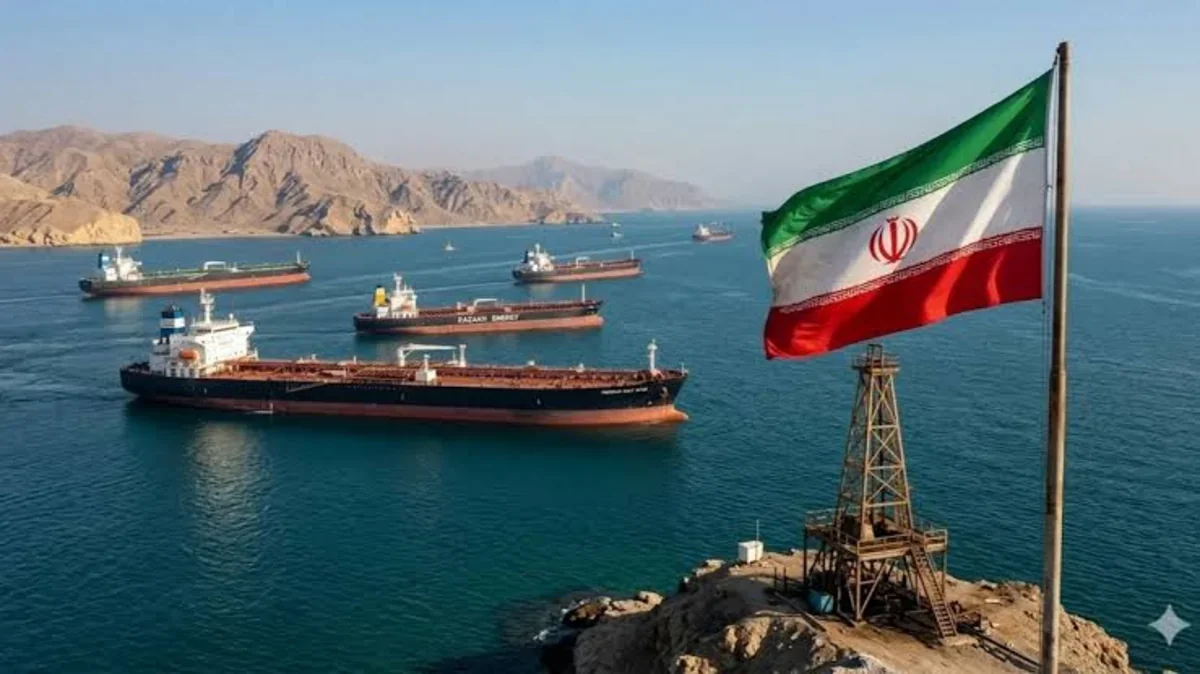
Following the agreement reached between the US and Iran, a sharp revival has been recorded in the movement of commercial vessels through the strategically important Strait of Hormuz. Over the last 5 days, a total of 172 vessels passed through the strait, averaging 34 vessels per day.
According to sea-news.az referencing foreign media, marine tracking data from analytical companies Kpler and MarineTraffic shows that following the opening of the transit line, 41 vessels passed through the strait on June 18, 22 on June 19, 42 on June 20, 28 on June 21, and 39 on June 22. Currently, commercial navigation in the Strait of Hormuz has reached 25 percent of its pre-military operations level. A significant growth dynamic is observed particularly in the transportation of crude oil and petroleum products.
Iranian Oil Exports and Regional Tanker Movement
Among the maritime vessels passing through the strait on June 22, tankers carrying Iranian oil attracted particular attention. On that day, 4 supertankers (VLCCs) carrying at least 7 million barrels of Iranian crude oil passed through Hormuz. In total, over the last 5 days, more than 13 million barrels of Iranian crude oil have been dispatched through the strait to be delivered to international buyers. During this period, a serious increase was also recorded in the number of crude oil tankers belonging to Saudi Arabia, Iraq, Qatar, and the United Arab Emirates passing through the Strait of Hormuz.
Pre-War and Post-War Indicators
For comparison, it should be noted that before the military conflict began in the region on February 28 of this year, approximately 130 commercial vessels passed through the Strait of Hormuz daily. However, during the active phase of military operations, this figure dropped to a minimum (1 vessel) on certain days, and during the 100 days that the war lasted, the daily average indicator amounted to just 10 commercial vessels. Thus, during the crisis period, global maritime trade in the strait dropped by up to 95 percent compared to previous levels. The current recovery process is considered an indicator of the revival of regional logistics.



