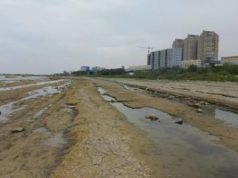
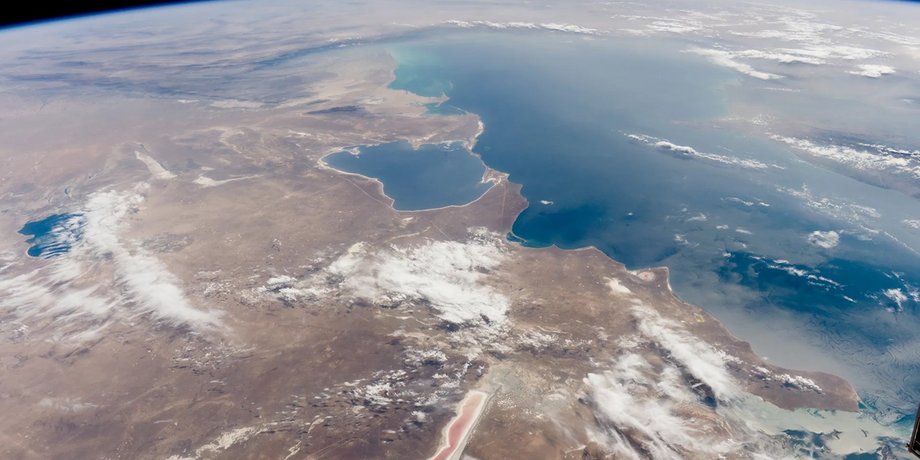
The Caspian Sea is the world’s largest endorheic lake. Studying the causes of its water level fluctuations, identifying the relationship between various natural factors and water levels, and forecasting future shifts hold immense scientific and practical significance.
Sea-news.az reports that Hasan Nabiyev, PhD in Geography and Senior Researcher at the Climate Department of the Institute of Geography under the Ministry of Science and Education, stated to AZERTAC that the level of the Caspian Sea primarily depends on the volume of inflow from rivers, atmospheric precipitation, and evaporation from the water surface. These components of the water balance fluctuate under the influence of climate and weather patterns.
Major and minor rivers including the Volga, Terek, Samur, Ural, Kura, Atrek, and Sefidrud flow into the Caspian Sea. Their total average annual discharge reaches 300 cubic kilometers. The Volga River accounts for 80 percent of the river water entering the sea and 70 percent of the revenue side of the water balance. Hundreds of rivers form the Volga’s catchment basin, with the Oka and Kama rivers being its largest tributaries.
“Since the Caspian Sea is a unified geosystem, there is a tight interplay between various processes and factors taking place here. A change in one process impacts the others as well. Water level fluctuations, pollution of the water body, and the depletion of biological resources rank among the core environmental issues,” the scientist noted.
H. Nabiyev added that the Caspian Sea is of paramount importance for Azerbaijan’s fuel, energy, and chemical industries, fisheries, coastal resort and recreational potential, and maritime transport. The sea’s rich oil and gas reserves, fish stocks, and vital role in international economic relations necessitate continuous research into its level fluctuations. In this regard, investigating the causes of sea level changes, establishing the links between natural factors and water levels, and projecting future trends remain highly critical issues.