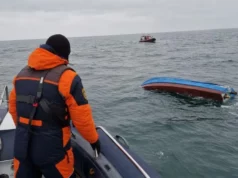
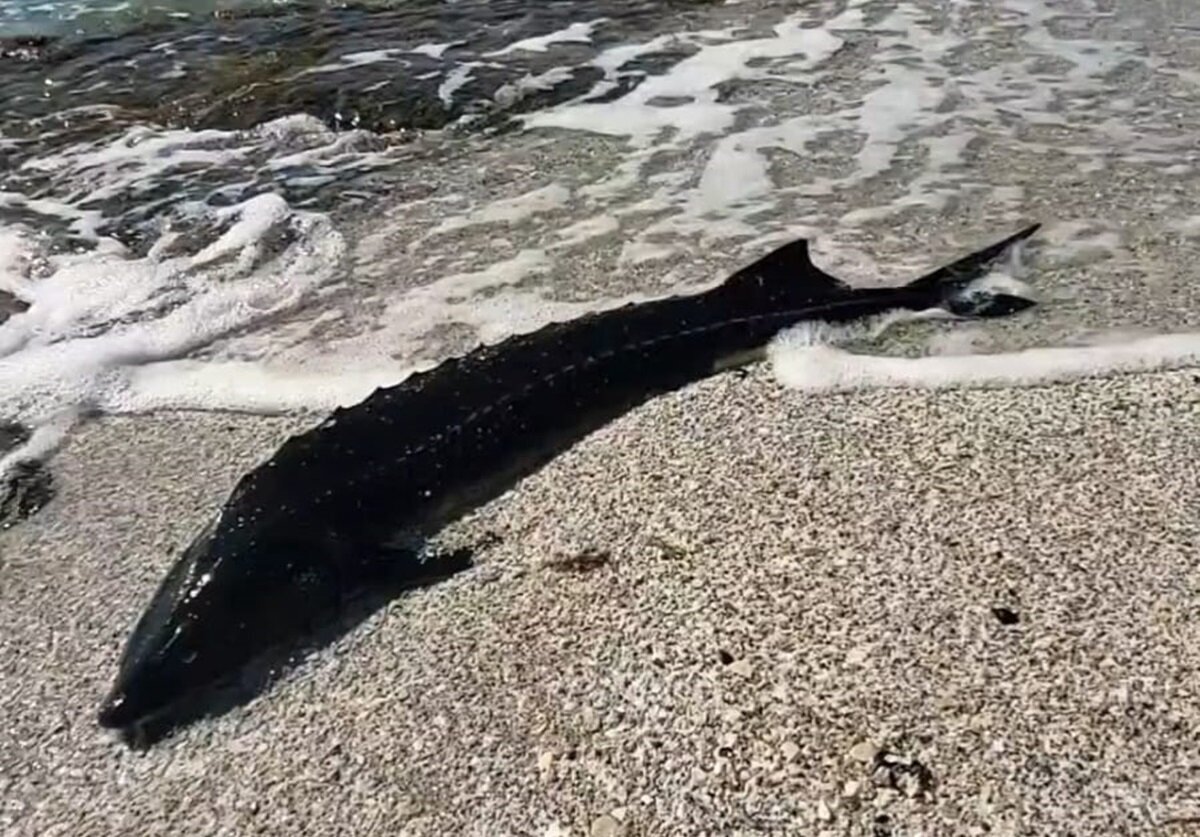
A total of 173 dead sturgeon have been discovered along the Caspian Sea coast in Kazakhstan’s Mangystau Region. The exact cause of the fish mortality has yet to be determined. The incident has raised inquiries regarding potential environmental repercussions for other regions of the Caspian basin, including Azerbaijan.
Sea-news.az reports citing Modern.az, that the Fisheries and Aquaculture Center stated that, based on current data, it is not possible to confirm whether the incident will have a direct impact on Azerbaijan.
The center emphasized that because the Caspian Sea constitutes a unified water body, shifts in its ecological status—including water quality, hydrometeorological conditions, and factors affecting the habitat of aquatic biological resources—are of significance to all littoral nations.
Nevertheless, insufficient data exists to assert that the event recorded on the Kazakh coast will trigger a similar situation in Azerbaijan or exert a direct impact on the country. Evaluating such a probability requires examining the cause of fish mortality, environmental conditions at the time of the event, hydrochemical water parameters, and other scientific metrics.
According to reports, the incident was registered on October 20. The dead fish were found along a roughly 15-kilometer stretch of coastline extending from the “Ömir glamping” recreation area toward Cape Peschany and the Port of Kuryk. The fish carcasses were reportedly found in various stages of decomposition.
Relevant state authorities have been notified, and operations regarding the collection, transportation, and disposal of the fish carcasses have been launched.
According to statements from competent Kazakh agencies, because the fish perished some time ago and the carcasses were in a naturally desiccated state, it was impossible to retrieve soft tissue samples for histological and toxicological analyses. Consequently, the precise cause of death remains unconfirmed.
Visual inspections revealed no traces of fishing nets or hook-and-line puncture marks on the fish bodies. Strong westerly winds washing the carcasses ashore have also been put forward among potential hypotheses.
It should be noted that in the absence of a definitive conclusion regarding the cause of the incident, it is currently impossible to attribute the fish mortality to any specific factor.