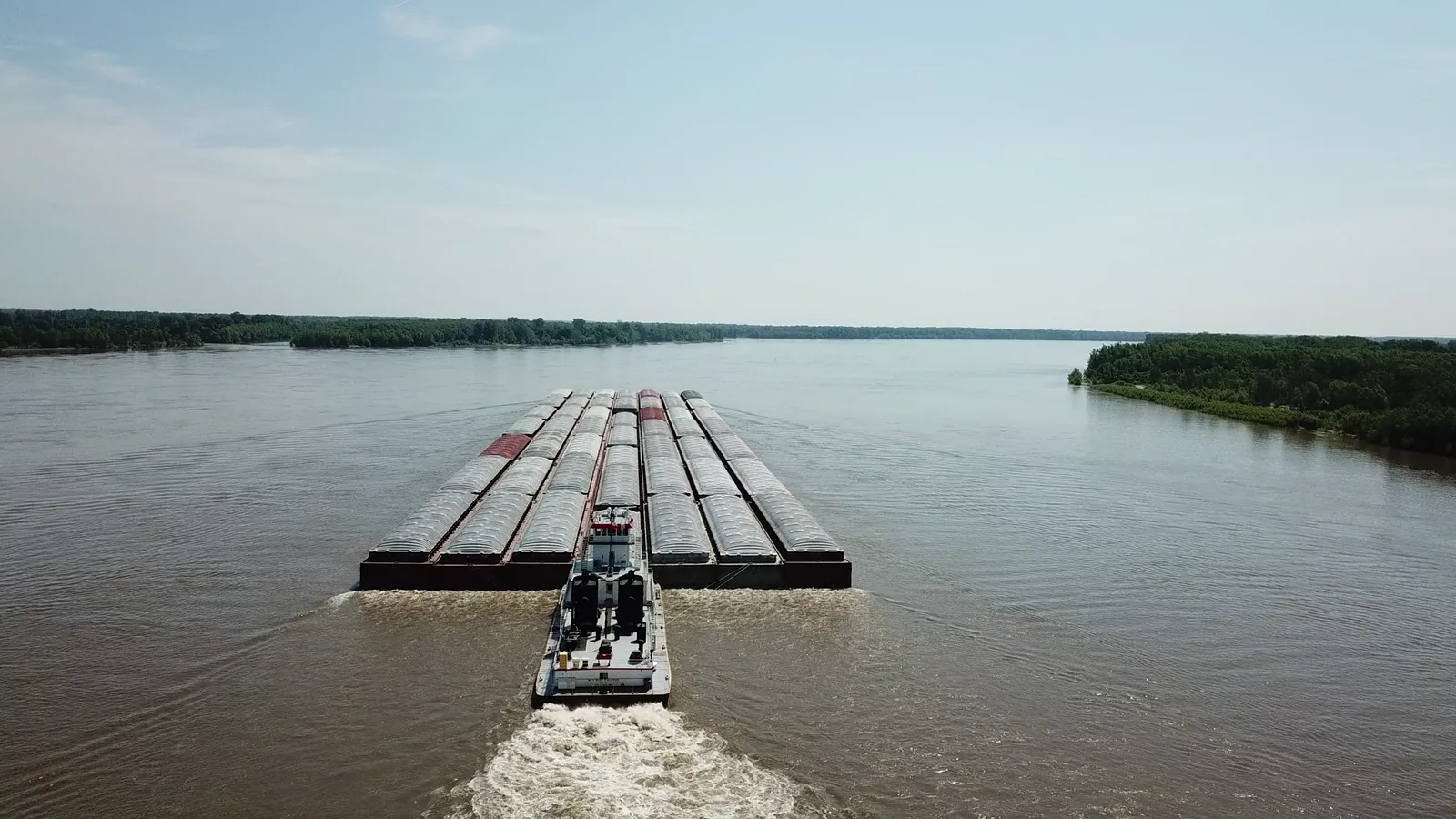
As the number of barges operating on US inland waterways rapidly declines, serious challenges could emerge in transporting exported grain over the coming decade. According to a report by CoBank, if current trends continue, the country’s inland barge fleet could shrink by approximately 17.4 percent by 2035.
Sea-news.az reports that the US inland waterway fleet currently comprises 19,668 barges. Over the past 10 years, the average age of the fleet has risen from 13.8 to 17.6 years. While roughly 410 new barges are built each year, between 500 and 1,000 are retired from service.
The primary obstacle to fleet renewal is the high cost of new barges. Constructing a single grain hopper barge currently costs around $1 million or more, compared to approximately $650,000 a decade ago.
The report notes that frequent drops in water levels on the Mississippi River, along with aging locks and dams, are complicating shipments. At the same time, US grain and oilseed exports are projected to increase by 9 percent by 2035.
Roughly half of the country’s corn and soybean exports and one-third of its wheat exports are transported via the Mississippi River. The shrinking barge fleet and rising freight costs could negatively impact farmers’ margins and US competitiveness in international markets.